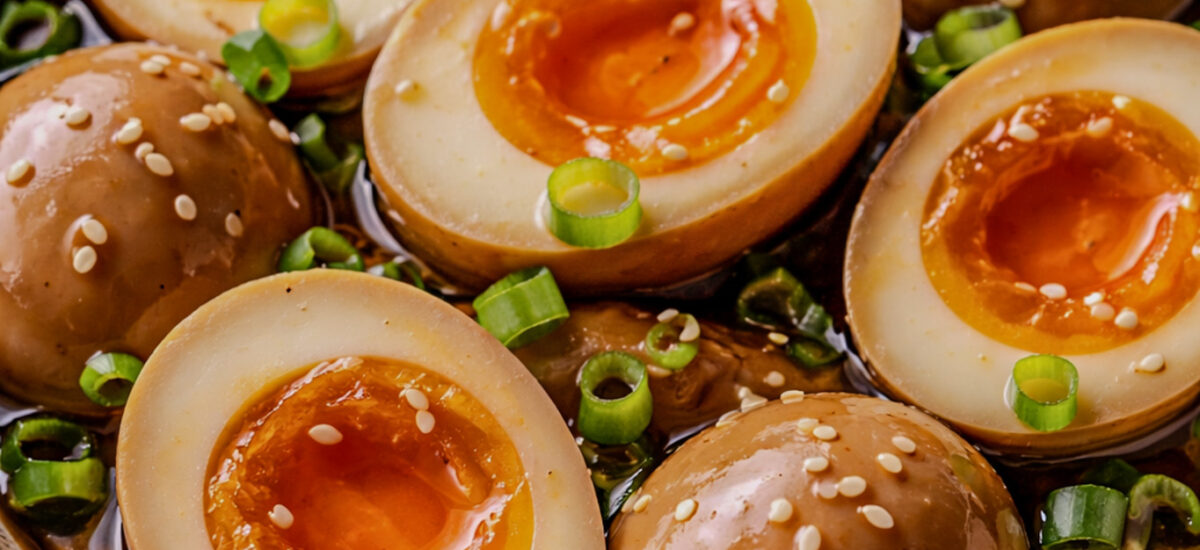
Japanese Marinated Ramen Eggs
Ajitama eggs, or ramen eggs as they’re often called, are one of those little touches that can really change up a bowl of ramen.
They're not loud or overpowering, but when you cut into one and the yolk settles into a glossy, custardy center, you realize why they're so special.
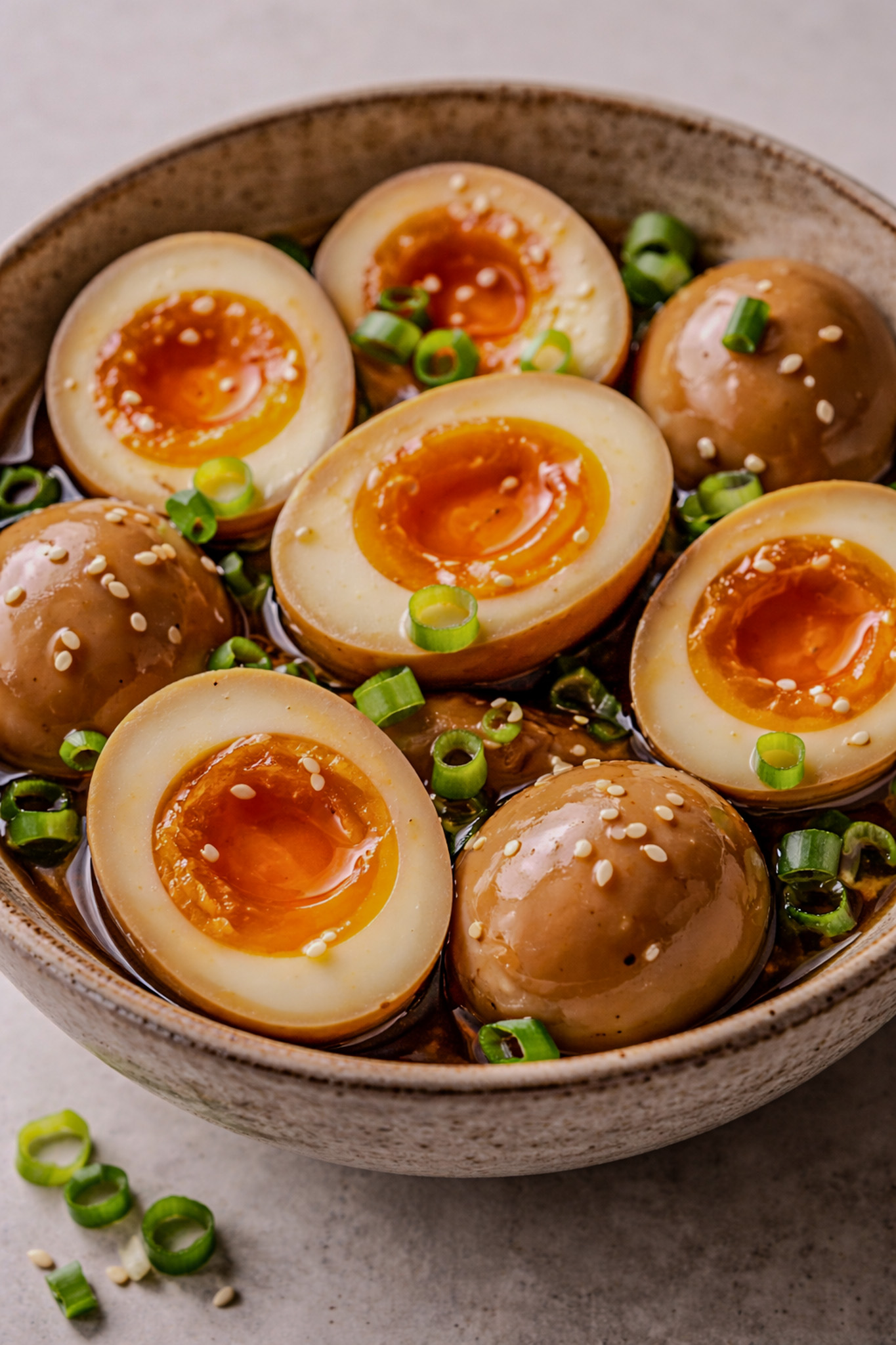
At their core, ajitama eggs are soft-boiled eggs gently marinated in a soy-based mixture. The whites take on a subtle bronze color. The yolks stay jammy and rich. The flavor deepens without masking the egg itself.
They're simple. But they reward precision. These are a must for our Spicy Miso Ramen.
It Starts With the Right Boil
The foundation of a good ajitama egg is a properly cooked soft-boiled egg.
Six minutes is my sweet spot.
The whites should be fully set - tender but structured. The yolk should feel just barely set at the edges and custardy at the center. When you slice it, the middle should hold its shape but still glisten.
Start with fully boiling water so your timing stays consistent. Lower the eggs gently. Cook for exactly six minutes. Then immediately transfer them to an ice bath.
The ice bath is crucial. It instantly stops the cooking process. Without it, residual heat continues to cook the yolk, and ajitama depends on that soft center.
Peel carefully once cooled. An egg poker helps prevent cracking and makes peeling easier, especially if your eggs are very fresh.
The Marinade: Simple and Balanced
The marinade is straightforward:
- 1 part water
- 1 part soy sauce
- 1 part mirin
For 2-4 eggs, ½ cup of each ingredient works well.
This isn't about soaking the egg in heavy seasoning. It's about balance.
Soy brings salt and umami. Mirin adds gentle sweetness. Water keeps the mixture from becoming too intense.
Submerge the peeled eggs and refrigerate for at least 6 hours, ideally overnight. Up to 24 hours is fine, but beyond that, the whites can firm too much, and the salt level increases noticeably.
You'll know they're ready when the exterior turns lightly tan, and the flavor tastes seasoned - not cured.
Texture Is the Real Goal
Ajitama isn't just about flavor. It's about texture.
When sliced, the yolk should be glossy and custard-like. Not runny. Not firm. Somewhere in between.
That contrast - seasoned white, jammy center - is what makes them special.
Ajitama eggs are soft-boiled eggs gently marinated in soy sauce and mirin until the yolks turn jammy and the flavor deepens. They're ideal for ramen, great over rice bowls, and a smart addition to weekly meal prep.
It's a quiet luxury.
Where Ajitama Shines
These eggs really shine in ramen, especially in miso or shoyu-based broths. The richness of the eggs complements the heat and salt beautifully.
But don't stop there.
- Slice them over steamed rice.
- Add them to grain bowls.
- Pair them with roasted vegetables.
- Serve with a small sprinkle of sesame seeds and scallions for a simple snack.
They hold up well for a few days in the refrigerator, which makes them a practical addition to your weekly meal prep.
Planning vs. Effort
Ajitama requires planning - not effort.
The actual hands-on time is minimal. Boil. Cool. Marinate.
The rest happens in the refrigerator.
That's part of their appeal. They feel thoughtful without being demanding.
And once you've made them once, you'll likely keep a batch ready in the fridge. They become one of those small upgrades that elevate everyday meals.
Patient Cook Notes
Ajitama is worth making at least once. The soy marinade adds depth and richness that elevates a bowl of ramen in a way that plain eggs can't quite replicate.
But if you're short on time, don't overthink it.
A properly cooked soft-boiled egg dropped into hot ramen still delivers that creamy yolk and satisfying finish.
Technique first. Marinate second.
Once you understand the timing, the rest becomes intuitive.
Recipe
Ajitama Eggs
Ingredients
- 2 – 4 eggs This is seriously good, consider picking one up, It makes peeling easier
- water

Equipment
Instructions
- Fill a saucepan ¾ of the way with water and bring to a boil. To the boiling water, gently lower in the egg(s).
- Have an ice bath ready.
- Cook for exactly 6 minutes. Transfer to the ice bath to cool completely before peeling. Usually 3 – 4 minutes.
- A Japanese marinated soft-boiled egg, they are wonderful, but they do require some time to steep. Follow the directions for a soft-boiled egg above. If you're doing Ajitama, this is a generally accepted approach.
- 1 part Water
- 1 part Soy
- 1 part Marin