Introduction
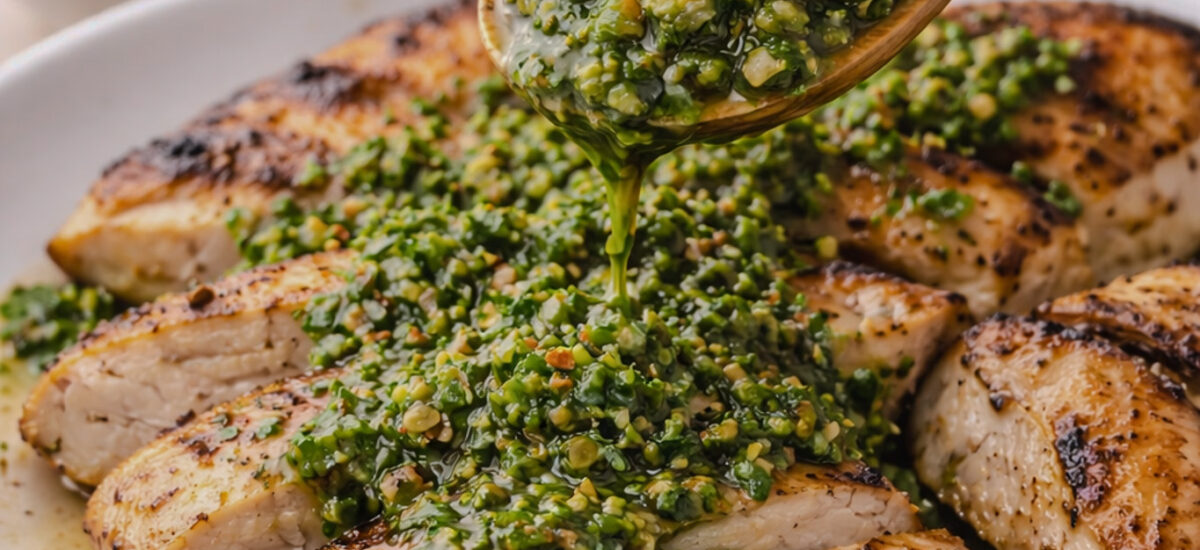
Grilled chicken doesn't need much to feel complete - just something bright enough to cut through the char and rich enough to bring everything together. That's where traditional chimichurri sauce comes in.
This herb-forward, Traditional Chimichurri sauce blends fresh parsley, garlic, olive oil, and red wine vinegar into a sharp, balanced, and deeply satisfying sauce. Spoon it generously over warm, sliced chicken, and it settles into every crevice, adding freshness, heat, and contrast in one simple step. Traditional chimichurri sauce is known for elevating grilled meats wonderfully.
It's quick to make, requires no cooking, and turns a straightforward protein into something layered and memorable.
Why This Recipe Works
Chimichurri relies on balance.
Parsley provides freshness and structure. Garlic adds punch. Vinegar brings acidity to cut through rich meats. Olive oil rounds everything out. Red pepper flakes add a subtle, steady heat rather than aggressive spice.
Letting the sauce rest allows the garlic to soften slightly and the flavors to integrate. Moreover, resting traditional chimichurri sauce enhances its texture and flavor.
Tips for Best Results
- Chop everything by hand for proper texture.
- Use good-quality olive oil - it makes up half the sauce.
- Let it rest before serving.
- Stir again just before spooning over food.
Variations
- Add a tablespoon of fresh chopped oregano instead of dried.
- Stir in a squeeze of lemon for extra brightness.
- Add a small handful of finely chopped cilantro for a less traditional variation.
Storage
Store in the refrigerator for up to 3 days. Bring to room temperature and stir before serving. Additionally, traditional chimichurri sauce keeps well and is excellent for meal prep.
Serving Suggestions
Chimichurri pairs beautifully with:
- Grilled steak
- Roasted chicken
- Lamb chops
- Grilled vegetables
- Crispy potatoes
It's also excellent spooned over grain bowls or mixed into warm roasted vegetables. Try traditional chimichurri sauce with roasted potatoes for a delicious twist.
Chimichurri vs. Italian Salsa Verde
At first glance, chimichurri and Italian salsa verde look similar. Both are herb-forward, olive oil-based sauces designed to brighten grilled meat. But their flavor profiles and techniques differ in subtle, important ways.
Understanding the difference helps you choose the right sauce for the right dish.
Origin
Chimichurri
Comes from Argentina and Uruguay. Traditionally served with grilled steak and other meats cooked over an open flame.
Italian Salsa Verde
Originates in Italy. Often paired with roasted meats, boiled vegetables, or simple grilled dishes.
Herb Base
Chimichurri
Primarily fresh flat-leaf parsley. Some variations include oregano (dried or fresh).
Italian Salsa Verde
Also built on parsley, but sometimes includes additional herbs depending on the region. Both are parsley-forward, but the seasoning surrounding that parsley shifts the flavor profile.
Acidity
Chimichurri
Uses red wine vinegar for a sharper, more pronounced acidity.
Italian Salsa Verde
Typically relies on fresh lemon juice for a cleaner, brighter lift. Vinegar gives chimichurri a slightly more assertive edge. Lemon keeps salsa verde lighter and fresher.
Savory Depth
Chimichurri
Garlic and red pepper flakes provide punch and mild heat. It stays herbaceous and bold.
Italian Salsa Verde
Anchovies and capers introduce briny, umami depth. It feels more savory and layered. This is one of the biggest differences. Salsa verde leans into salinity and complexity, while chimichurri leans into brightness and heat.
Texture
Chimichurri
Loosely chopped and rustic. No blending - everything stays distinct.
Italian Salsa Verde
Can be pulsed slightly finer. Traditional versions may include lightly toasted bread for the body. Chimichurri feels raw and vibrant. Salsa verde feels slightly more structured.
Best Pairings
Chimichurri
Choose chimichurri when you want:
- A marinade and finishing sauce in one
- A bold sauce for grilled steak
- Bright contrast to smoky meat
Italian Salsa Verde
Choose Italian salsa verde when you want:
- A sauce with deeper umami notes
- A briny, savory accent
- Something for roasted chicken or vegetables
The Bottom Line
Both sauces rely on simple ingredients and careful balance. Chimichurri emphasizes vinegar, garlic, and heat. Salsa verde leans into lemon, anchovy, and capers.
Neither is better - they simply serve different purposes.
If you enjoy herb-forward sauces, keeping both in your rotation gives you flexibility across seasons and proteins.
FAQ
What is traditional chimichurri made of?
Parsley, garlic, olive oil, red wine vinegar, oregano, and red pepper flakes.
Is chimichurri spicy?
Traditionally mild with subtle heat from red pepper flakes.
Can chimichurri be used as a marinade?
Yes - it works as both a marinade and finishing sauce.
How long does chimichurri last?
Up to 3 days refrigerated.
Parsley, garlic, olive oil, red wine vinegar, oregano, and red pepper flakes.
Traditionally mild with subtle heat from red pepper flakes.
Yes - it works as both a marinade and finishing sauce.
Up to 3 days refrigerated.
Recipe
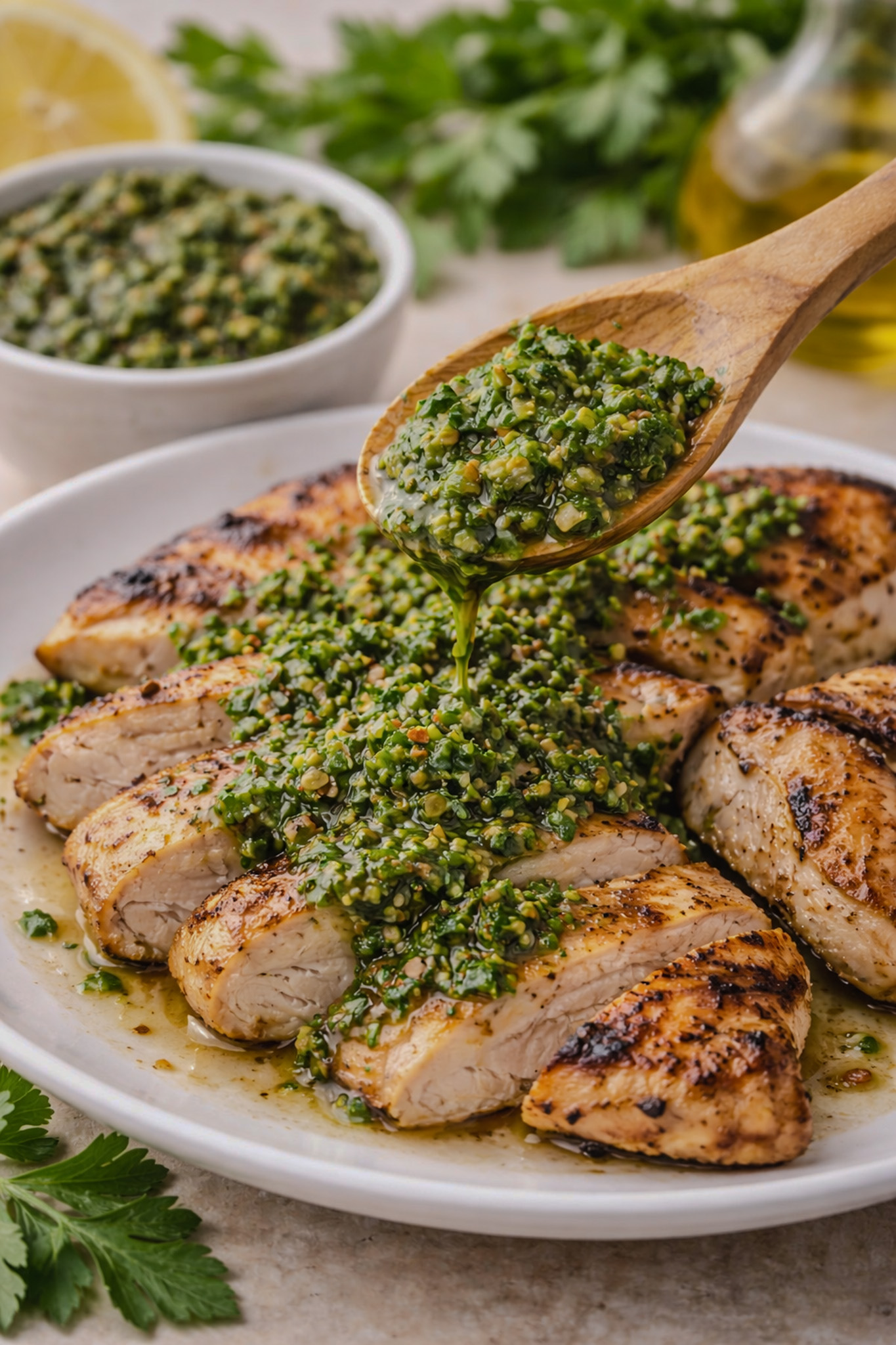
Traditional Chimichurri (Argentinian Herb Sauce)
Ingredients
- 1 cup fresh flat-leaf parsley, finely chopped
- 3 cloves garlic, very finely minced
- 2 tablespoons red wine vinegar
- ½ cup extra-virgin olive oil
- ½ teaspoon dried oregano
- ½ teaspoon red pepper flakes, add more if you like
- ½ teaspoon kosher salt
- Freshly ground black pepper

Instructions
- Finely chop the parsley by hand. Avoid using a food processor - traditional chimichurri should have texture, not a puree-like consistency.
- Add the parsley to a bowl with minced garlic, oregano, red pepper flakes, salt, and black pepper.
- Stir in the red wine vinegar.
- Slowly pour in the olive oil and stir until combined.
- Let the sauce rest for at least 15 minutes before serving to allow the flavors to meld.