Introduction
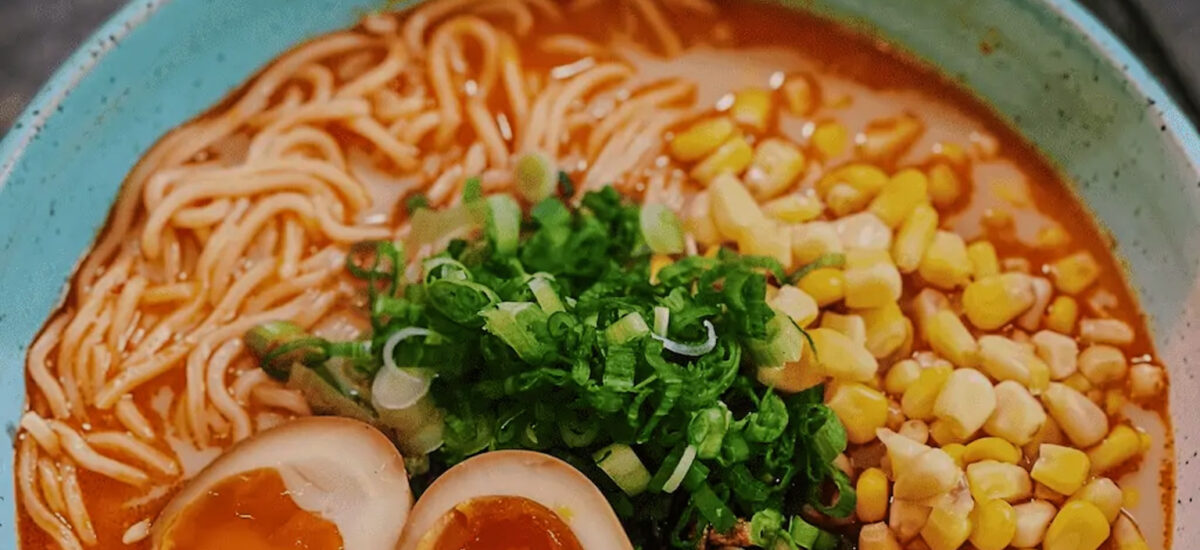
There's a moment when you lean over a bowl of ramen and the steam hits your face - savory, warm, layered with depth. That's what this Spicy Miso Ramen delivers.
It's got a bold vibe without being too much. It feels rich but isn't weighing you down. It's complex but still easy to get.
At its core, this ramen builds flavor in layers. Dashi brings a subtle oceanic backbone. Chicken stock adds body. Miso delivers salt and umami. Doubanjiang and chili bring warmth that lingers without overpowering the bowl.
The result is a broth that feels full-bodied and balanced - slightly sweet, gently spicy, and deeply satisfying.
The Five Essentials of Ramen
Every bowl of ramen, no matter the style, is built on five key elements. Once you get a handle on these, you can pretty much whip up any version you want.
1. Broth
This is the backbone. In this recipe, dashi and chicken stock create structure and depth without requiring a 12-hour simmer.
2. Tare (Seasoning Base)
Tare provides the salt and the bowl’s identity. Here, miso acts as the tare - bringing umami, sweetness, and body.
3. Aromatic Fat
Flavor blooms in fat. Sesame oil, pork drippings, and chili paste carry heat and fragrance throughout the broth.
4. Noodles
Ramen noodles aren't just filler - they're structure. Cook them just shy of soft so they hold their bite once submerged.
5. Toppings
Eggs, pork, scallions, corn, pickles - these create contrast. Texture matters as much as flavor. At a minimum, serve with a soft-boiled egg. Plan ahead and serve with an Ajitama Egg
When these five elements work together, the bowl feels complete.
Building Flavor From the Base
Good ramen isn't just about the noodles; it's all about that flavorful broth.
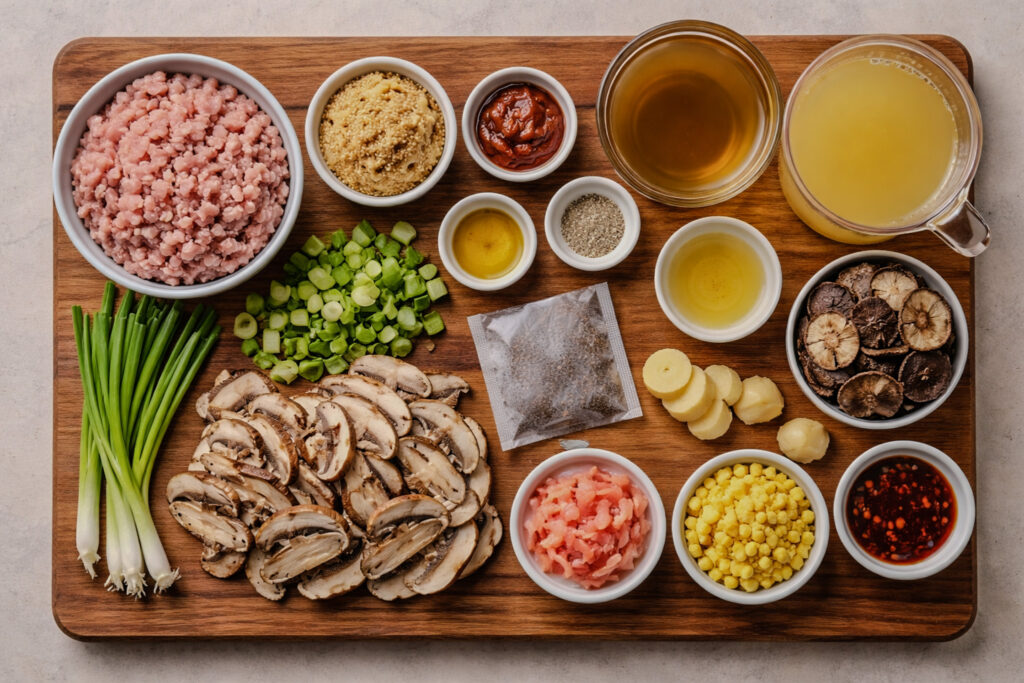
The dashi comes together first - water, a stock packet, and dried shiitake mushrooms simmered just long enough to extract depth. It's light but foundational.
From there, the base builds in stages.
Ground pork cooks until it breaks into small pieces and browns in spots. Those crispy bits matter. They add texture and richness that carry through the entire bowl.
Mushrooms follow, softening and absorbing flavor. Aromatics - scallions, shallots, ginger - go in next, releasing fragrance into the hot oil. A small spoonful of sugar balances the heat. Sesame oil rounds it out. Mirin adds quiet sweetness.
Then comes the liquid.
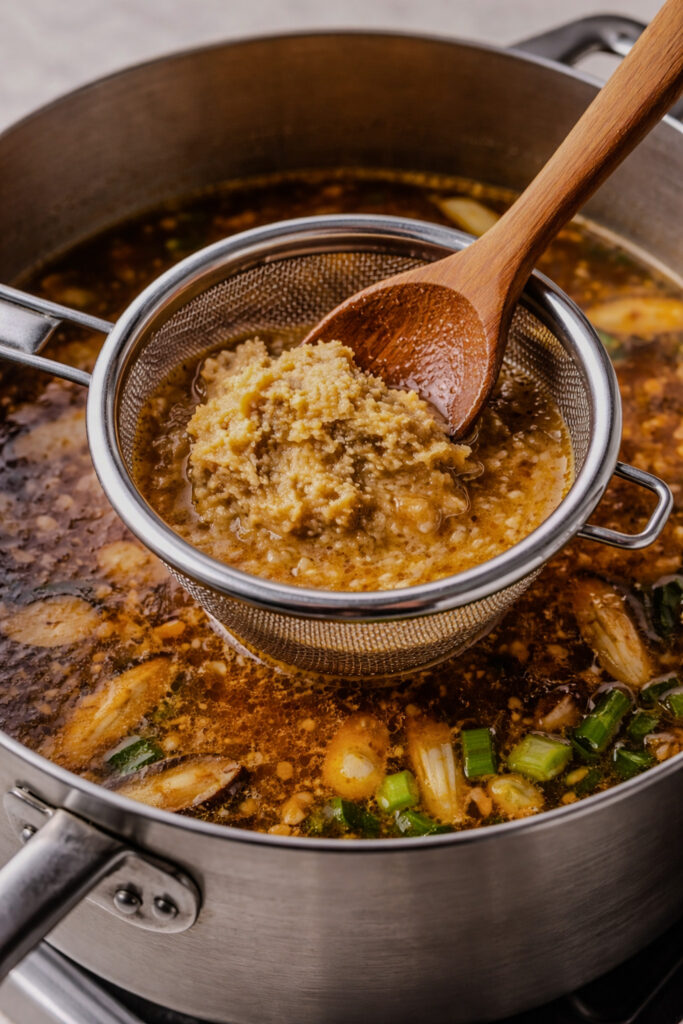
Dashi and chicken stock simmer together, creating structure. The miso is gently pressed through a strainer into the broth - never boiled aggressively - so it dissolves smoothly and keeps its character.
Each step has a purpose. Nothing is rushed.
The Role of Miso
Miso is the anchor here.
Red miso will give you deeper intensity and more salt. White miso is slightly sweeter and softer. Either works - it depends on the kind of bowl you're building.
The key is balance.
Let the miso bring salinity and umami. Let the chili bring warmth, not overwhelm. If you taste and adjust slowly, you'll land in the right place.
Noodles Matter More Than You Think
Ramen noodles should be cooked just shy of soft.
They continue absorbing liquid once submerged in broth. If you overcook them even slightly, they lose structure too quickly in the bowl.
Cook them until they still have a little resistance, then transfer directly to your serving bowl.
From there, the hot broth finishes the job.
Toppings Create Contrast
This bowl comes alive in the assembly.
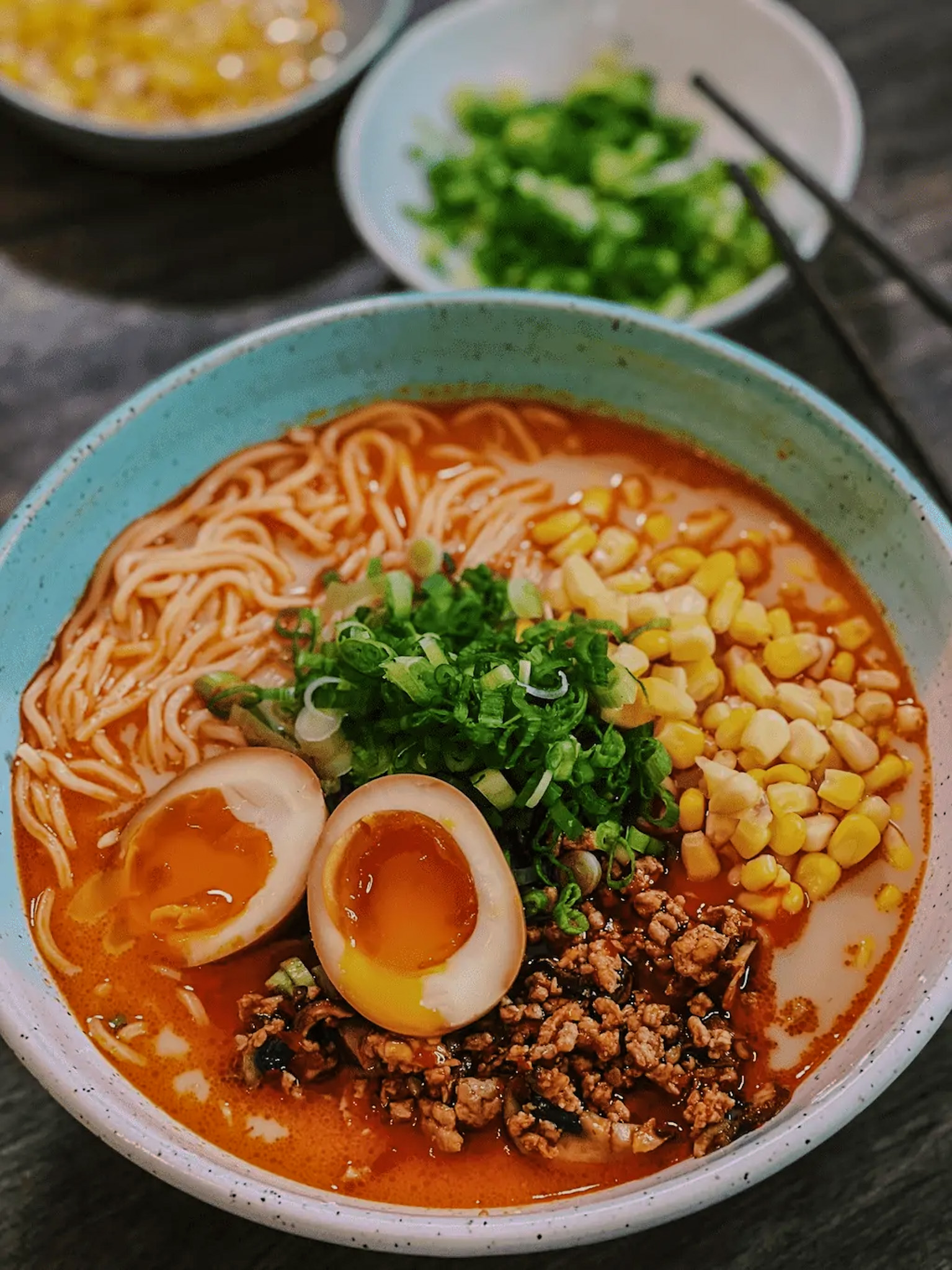
A soft-boiled egg adds richness. When cut open, the yolk flows gently into the broth. Ajitama eggs - soy-marinated and jammy - deepen the flavor even more if you have time.
Sweet corn adds subtle sweetness. Green onions bring freshness. Pickled radish or ginger sharpens the edges. Chili oil is optional - I usually skip it since the broth carries enough heat on its own.
Every topping plays a role. Texture matters just as much as flavor.
Why This Ramen Works at Home
Traditional ramen can be intimidating. Long-simmered broths. Specialty ingredients. Technical steps.
This version focuses on what matters most - layered flavor and careful balance - without unnecessary complication.
You're not chasing perfection. You're building depth thoughtfully.
Once you make it the first time, the process becomes intuitive. The flow feels natural. The timing lines up. And each bowl comes together more easily than the last.
Slowing Down for the Bowl
Spicy Miso Ramen isn't fast food. It rewards attention.
The broth warms you immediately. The noodles anchor the bowl. The egg adds silkiness. The pork carries richness. The miso ties it together.
It's comforting without being heavy. Spicy without being harsh. Familiar, but still layered enough to feel intentional.
This is ramen you can make at home with confidence - and a bowl worth slowing down for.
Recipe
Spicy Miso Ramen
Ingredients
- 2 cups water
- 1 Dashi Stock Packet
- 6 dried shiitake mushrooms to the boil, A few more or less is fine
- 2 tablespoons neutral oil, grape seed is generally what I use
- ½ pound ground pork
- 5 shiitake mushrooms, thinly sliced
- Kosher salt, to taste
- 3 green onions, chopped in large chunks
- 1 shallot, rough chopped
- 1 knob ginger, cut into rounds
- 1 teaspoon granulated sugar
- 1 teaspoon toasted sesame oil
- ½ teaspoon ground white pepper
- 1-2 teaspoons youki doubanjiang, based on your spice preference
- 1 tablespoon mirin
- 2 cups dashi
- 1 quart chicken stock
- 3 tablespoon miso, red or white
- Kosher salt, to taste

Instructions
- In a medium-sized pot, add the water and dashi packet. Heat over medium heat until the water begins to simmer. Simmer for 5 minutes
- Remove from heat and set aside.
- Heat a large pot or rondeau over medium heat. Add the oil and let it heat up. Add in the ground pork and break it up into small pieces with the edge of a wooden spoon. Cook for 3-4 minutes, stirring often, until the pork is broken down into very small pieces which are golden brown and crispy in parts.
- Add the mushrooms to the pan with the pork and season with salt. Sauté until the mushrooms have softened and are just beginning to brown.
- Stir in the white and light green scallions, shallot and ginger. Season with another pinch of salt and sauté for 1-2 minutes or until fragrant.
- Add the sugar, sesame oil, white pepper, Youki, and mirin. Allow to cook for 1 minute, stirring to incorporate.
- Pour in the dashi and chicken stock, and bring to a simmer. Simmer for about 10 minutes.
- Strain the broth through a mesh strainer into a large bowl. Add the strained broth back to the pot and bring it back to a simmer for a few minutes.
- Remove from heat and place the bottom of a mesh strainer into the broth. Add the miso to the strainer and use the back of a spoon to push the miso through the strainer into the broth. Dipping the miso into the hot broth will help warm it up so it is easier to press it through the strainer. Once added, stir the broth to evenly combine the miso.
- Simmer for another 5 – 10 minutes and keep warm until ready to serve.
- 8 oz cooked ramen noodles (4 oz per serving)
- 2 pints spicy miso broth (~1 pint per serving)
- 1 soft boiled egg. You can halve it if you want, I like a whole egg (ajitama egg)
- Frozen corn, at room temp
- Thinly sliced green onion
- Julienned pickled radish, optional
- 2 - 4 teaspoons of chili oil, optional. I generally skip this as the broth is spicy enough for me
- Place the cooked noodles into 2 ramen bowls and ladle the broth over the top. Top each with a soft-boiled egg (halved or whole), a spoonful of corn, green onions, pickled ginger, and a drizzle of chili oil. Serve, slurp, and enjoy!