Introduction
Eggs look simple. They aren't.
A minute too long and the yolk tightens. A minute too short and the whites don't fully set. The difference between soft, jammy, and hard isn't dramatic - it's measured in seconds.
This guide breaks down every core texture you can achieve when cooking eggs in the shell. Whether you prefer a spoonable center, a custardy, jammy yolk, or a fully set, hard-boiled egg, you'll know exactly how to get there - consistently.
Once you understand timing and heat, the rest becomes easy.
The Foundation: Start the Same Way Every Time
Consistency begins before the timer starts.
- Use large eggs.
- Bring water to a full boil before adding eggs (unless using a cold-start method).
- Lower eggs gently with a spoon.
- An ice bath immediately after cooking.
The ice bath isn't optional. It stops the cooking and locks in the texture you're aiming for.
Now let's break down each texture.
Soft-Boiled Eggs
Set Whites, Runny Centers
This is the closest thing to a sunny-side-up egg in a shell.
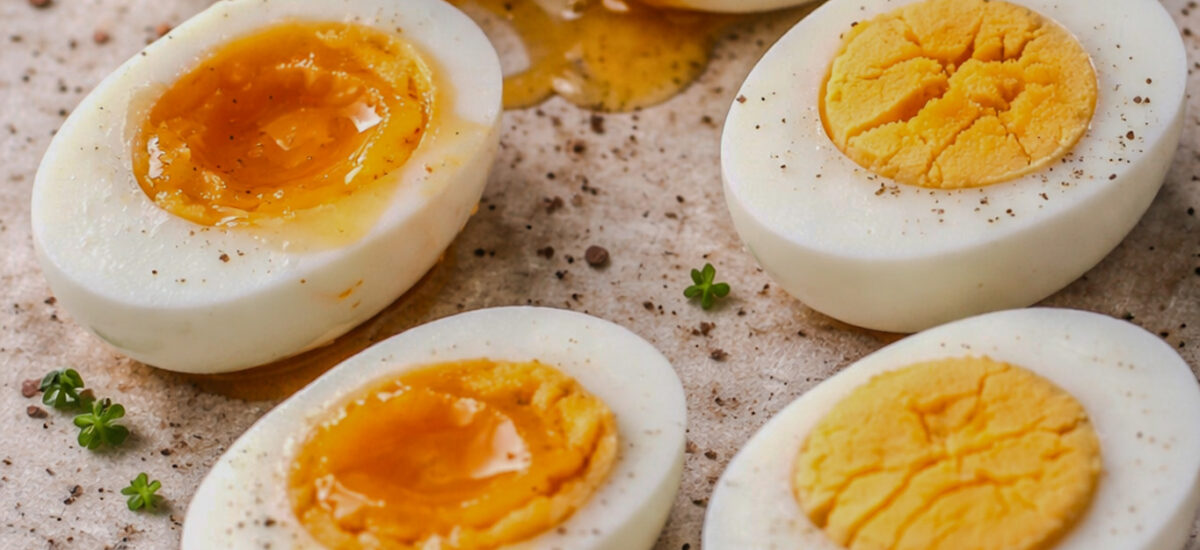
The whites are fully set and tender. The yolk flows freely when cut - rich, golden, and silky.
Soft-boiled eggs are perfect for:
- Toast
- Ramen
- Grain bowls
- Dipping soldiers
The key is precision. Even 30 extra seconds changes the texture noticeably.
→ Read the full method: Soft-Boiled Eggs (Set Whites, Runny Centers)
→ Prefer a slightly thicker center? See: Soft-Boiled Eggs (Jammy Centers)
Jammy Eggs
Custardy Centers, Not Fully Liquid
Jammy eggs sit between soft and hard. The whites are firm. The yolk holds its shape but remains creamy in the center.
Slice one in half, and the yolk doesn't run - it glows.
These are ideal for:
- Salads
- Noodle bowls
- Sandwiches
- Ajitama-style marinated eggs
Jammy eggs are forgiving. They offer structure without losing richness.
→ Read the full method: Soft-Boiled Eggs (Set Whites, Jammy Centers)
Hard-Boiled Eggs
Tender Whites, Fully Set Yolks
Hard-boiled eggs should never be rubbery. The whites stay tender. The yolks cook through without turning chalky or green.
This texture works best for:
- Egg salad
- Deviled eggs
- Meal prep
- Simple protein additions
The mistake most people make? Overcooking. Hard-boiled does not mean aggressively boiled.
→ Stovetop method: Hard-Boiled Eggs (Tender Whites, Fully Set Yolks)
→ Hard-boiled eggs in a Kettle
Ajitama (Marinated Ramen Eggs)
Ajitama begins as a jammy egg, then rests in a soy-based marinade. The whites bronze. The yolk deepens. The flavor builds without overpowering the egg itself.
These elevate:
- Ramen
- Rice bowls
- Simple lunches
They require a little planning - but very little effort.
Egg Timing Chart (Large Eggs)
Below is a reliable timing reference using the boiling-water method.
| Cook Time | Texture | Best For |
| 6 minutes | Set whites, runny center | Toast, ramen |
| 6:30 minutes | Slightly thickened center | Bowls |
| 7 minutes | Jammy | Salads, marinating |
| 9 minutes | Mostly set yolk | Egg salad |
| 10–11 minutes | Fully set yolk | Deviled eggs |
Adjust slightly for:
- Egg size
- Altitude
- Personal preference
If you're unsure, start at 6 minutes and work upward.
I'm personally a 6-minute fan - it's that sunny-side-up-in-a-shell texture.
Common Mistakes to Avoid
Overcooking.
Even 30 seconds can completely shift the texture.
Skipping the ice bath.
Residual heat keeps cooking the egg unless stopped.
Crowding the pot.
Eggs need space to cook evenly.
Old eggs for soft-boiled.
Very fresh eggs hold together better, resulting in a softer texture.
Choosing the Right Texture
The "best" egg isn't universal. It depends on how you're using it.
- Want richness that coats toast? → Soft
- Want structure in a salad? → Jammy
- Want clean slices for sandwiches? → Hard
- Want depth for ramen? → Ajitama
Master all three, and you never have to guess again.
Building Your Egg Technique Library
This page will continue to grow as more egg methods are added, including:
- Steamed eggs
- Instant Pot eggs
- Sous vide eggs
- Baked eggs in shells
Think of this as your starting point - the core fundamentals.
Eggs reward attention. And once you dial in your timing, they become one of the most reliable ingredients in your kitchen.