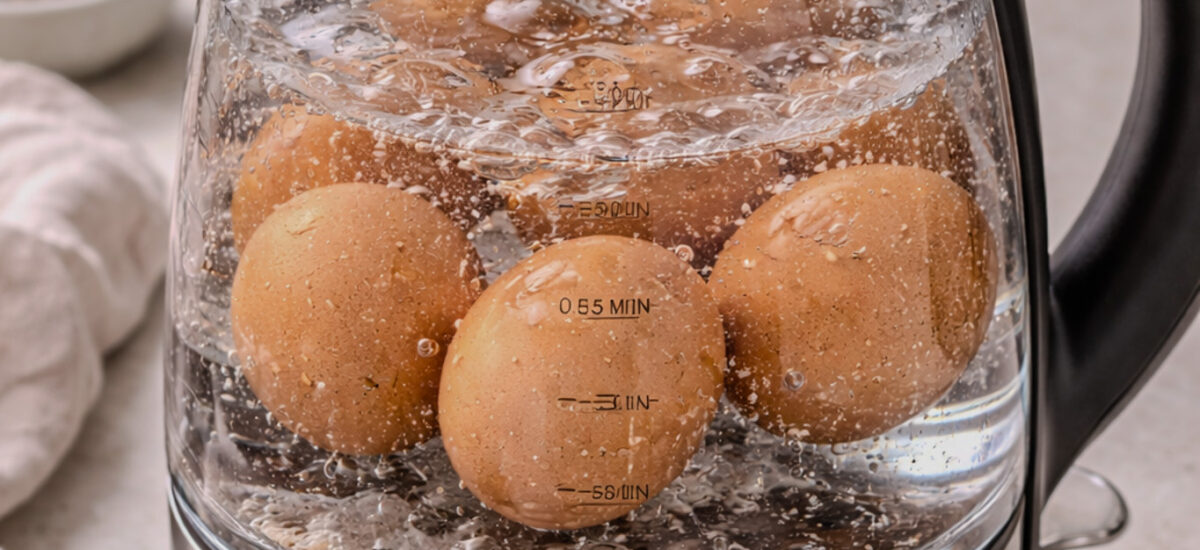
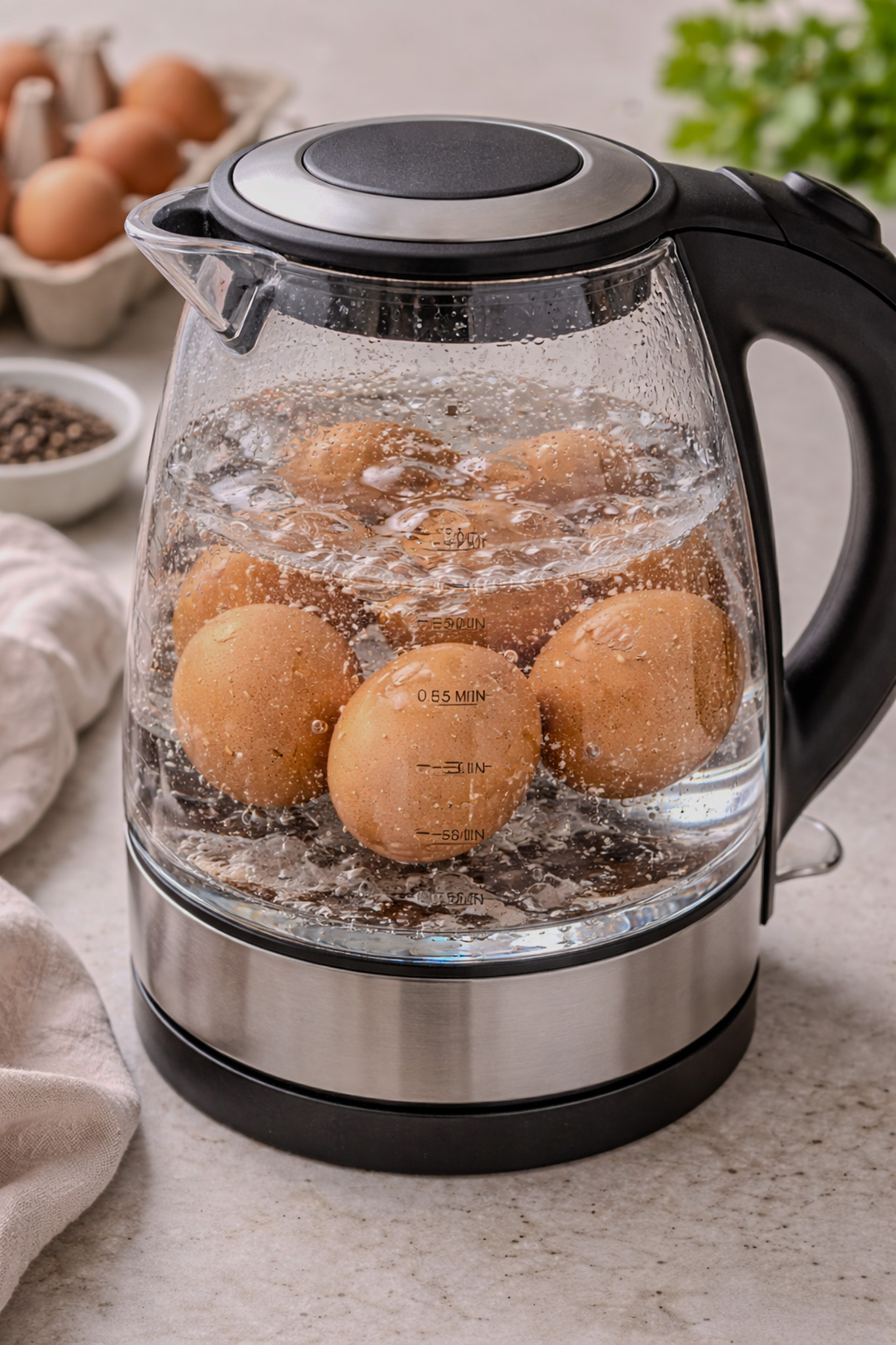
Hard-boiled eggs are one of the simplest and most useful kitchen staples you can make. Using an electric kettle might seem unusual at first, but it's actually one of the most reliable ways to cook them. With fast-boiling water and steady heat, the kettle makes it easy to cook eggs consistently without having to watch a pot on the stove.
This method relies on timing and residual heat rather than constant cooking. Once the water reaches a boil, the eggs gently finish cooking while the kettle rests, giving you firm whites and tender yolks. A quick ice bath stops the cooking and makes peeling easier.
If you're looking for a fast, low-effort way to make hard-boiled eggs, the kettle method is simple, reliable, and surprisingly effective.
Background
Hard-boiled eggs are used in kitchens all over the world. They show up in everything from breakfast plates and lunchboxes to salads, grain bowls, and snack boards. Because they're high in protein and easy to prepare ahead of time, they're a staple for meal prep.
This kettle method is especially useful in small kitchens, dorms, offices, or anywhere you might not have easy access to a stove. The technique is also great during warmer months when you don't want to heat up the kitchen with a burner.
Hard-boiled eggs also become especially popular around spring holidays like Easter, when eggs are used for coloring, deviled eggs, and potato salads.
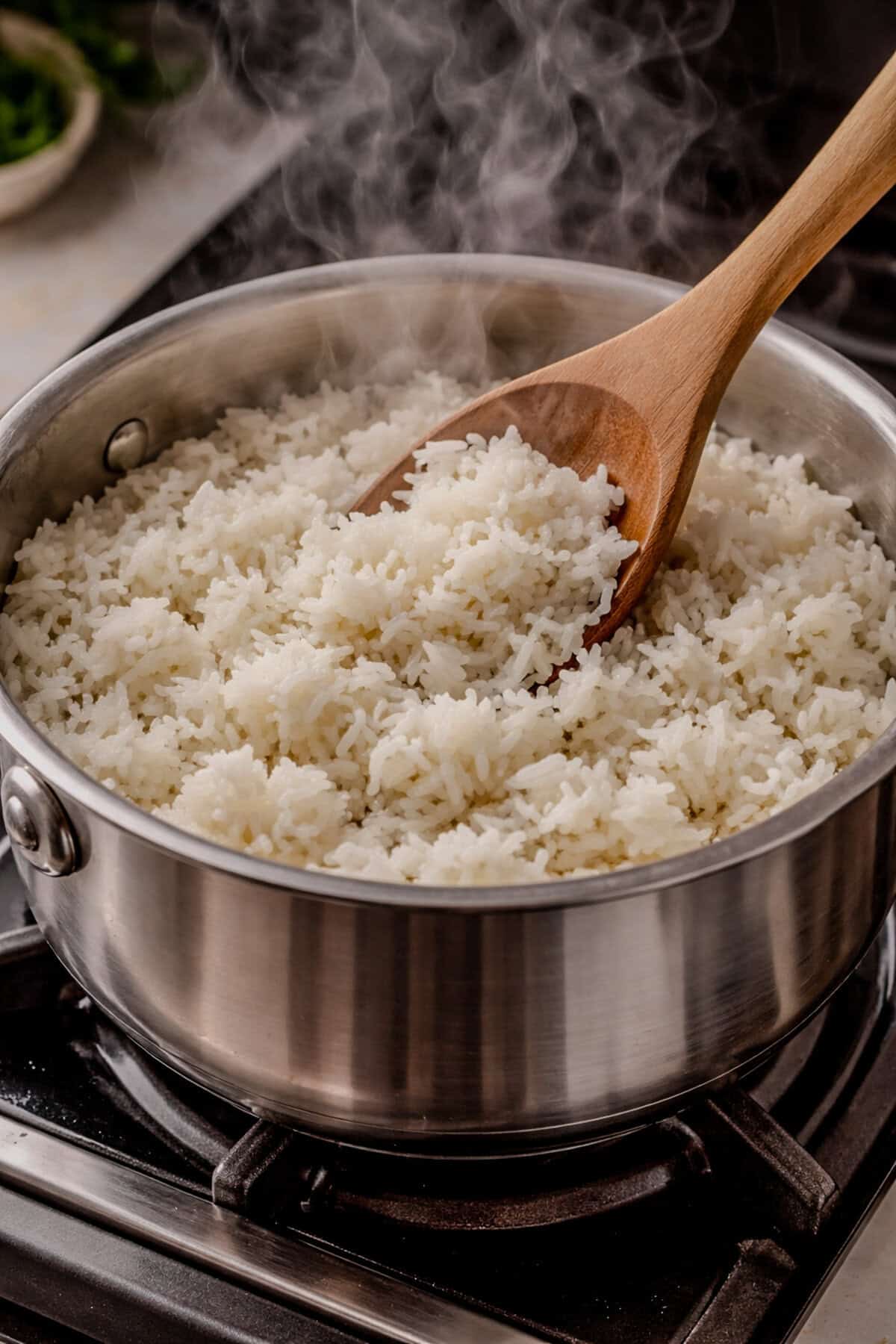
If you enjoy practical cooking shortcuts like this one, you might also like my guide to perfect steamed rice or simple one-pan dinners that minimize cleanup.
Jump to:
Ingredients
For this recipe, the ingredient list is intentionally minimal. Eggs cook best when they're handled gently and cooked with consistent heat, so there's no need for complicated additions.
A small amount of salt in the water can help reduce cracking and make peeling slightly easier. Fresh eggs will cook beautifully with this method, but eggs a few days old peel the easiest.
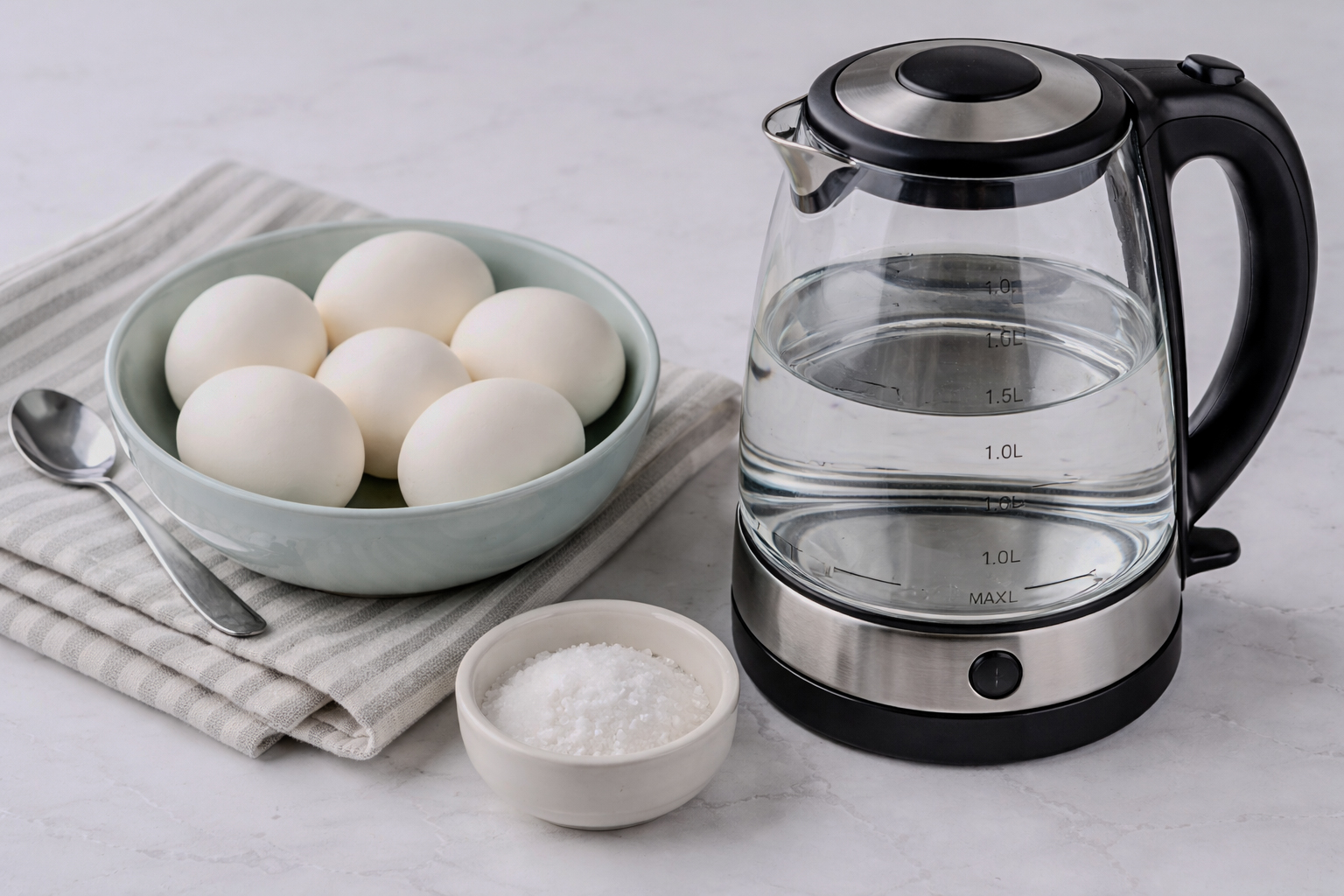
- Eggs
- Salt
See recipe card for quantities.
Instructions
Use this section for process shots, alternating between the step and image showing the step. Users don’t like seeing process shots cluttering up the recipe card, so include your process shots here.
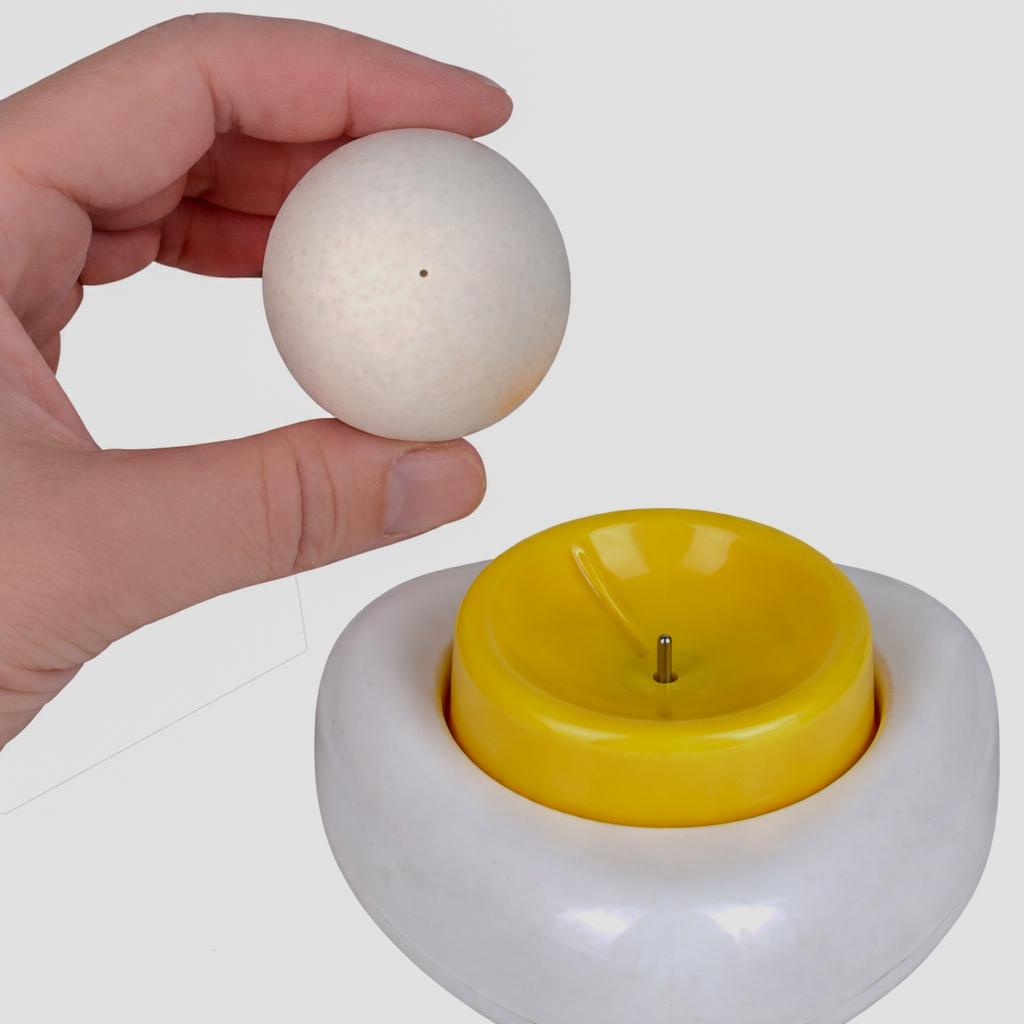
Step 1: Use an egg poker to gently pierce the wide end of each egg. This helps release pressure during cooking and can prevent cracking.
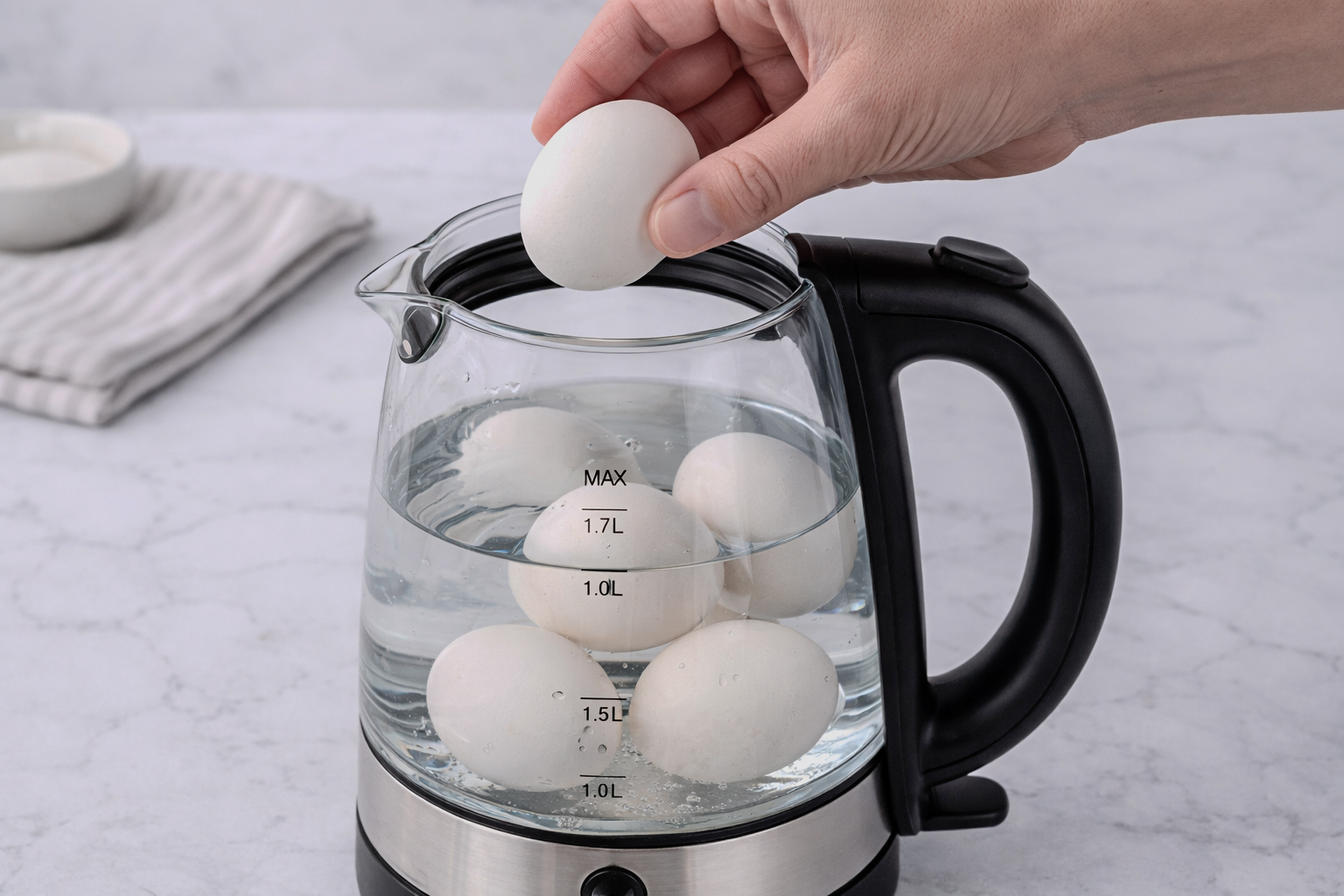
Step 2: Carefully place the eggs into the electric kettle and cover them with cold water.
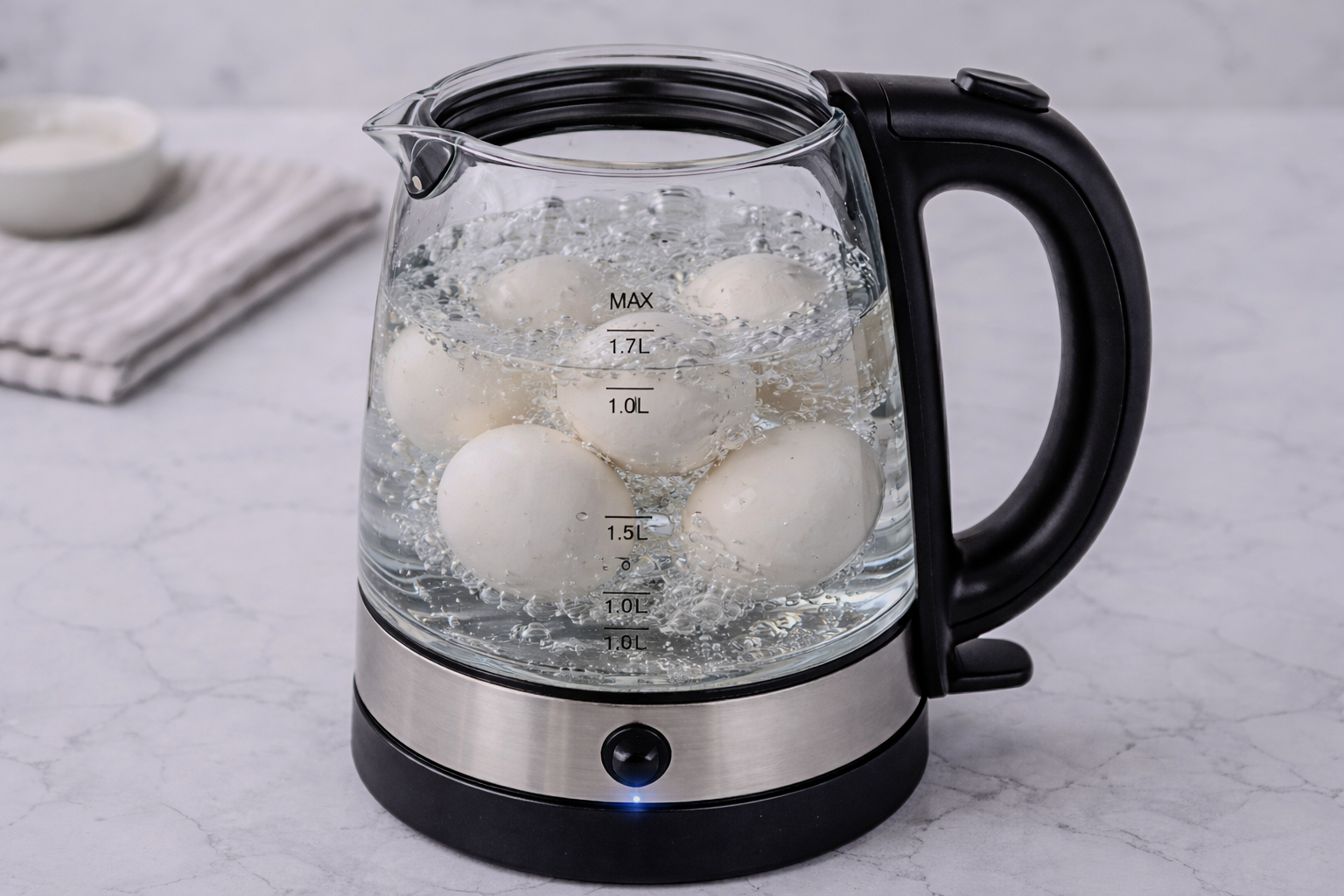
Step 3: Turn the kettle on and bring the water to a full boil. Most electric kettles automatically shut off once boiling is reached.
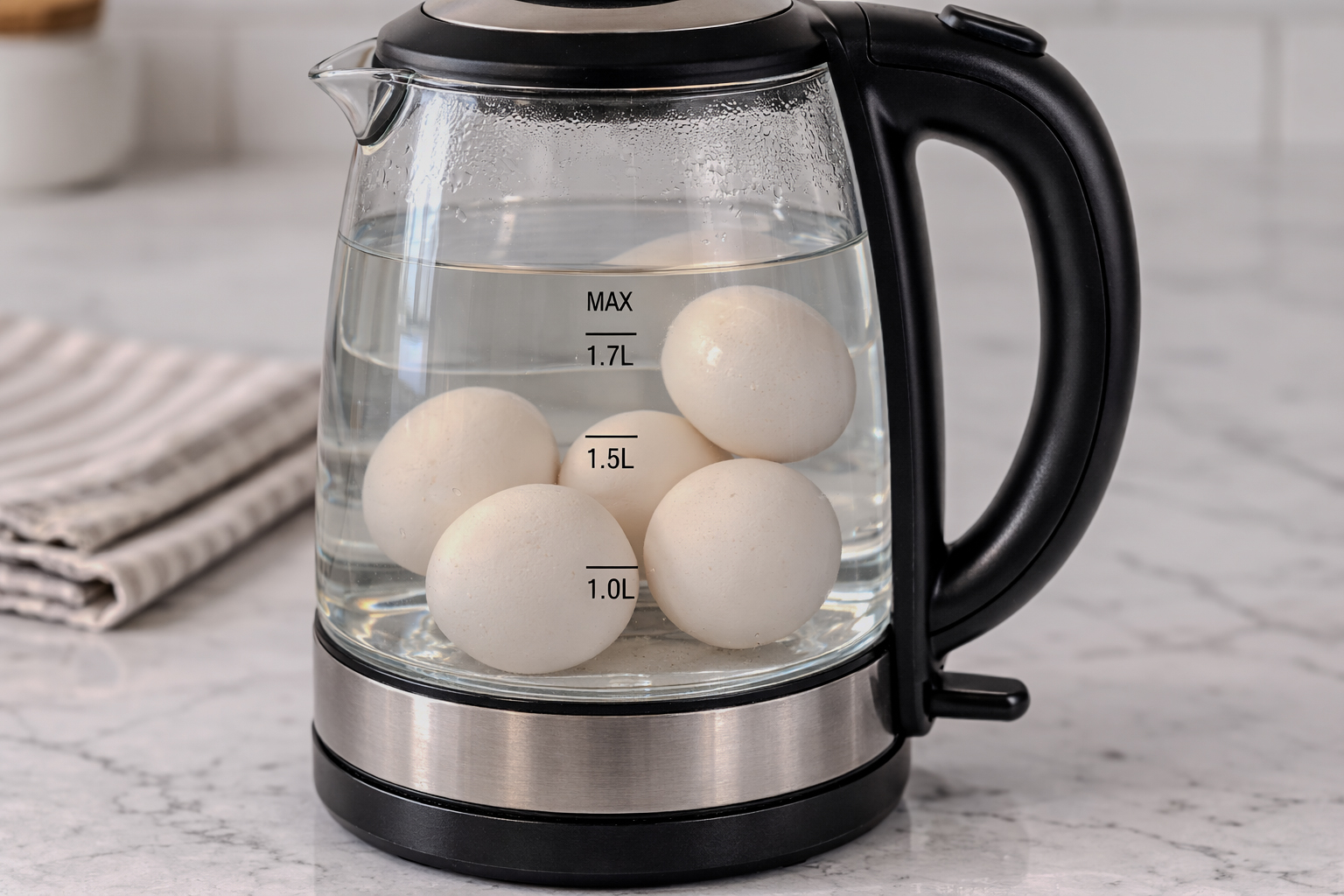
Step 4: Once the kettle turns off, start a timer and allow the eggs to sit in the hot water for about 10 minutes.
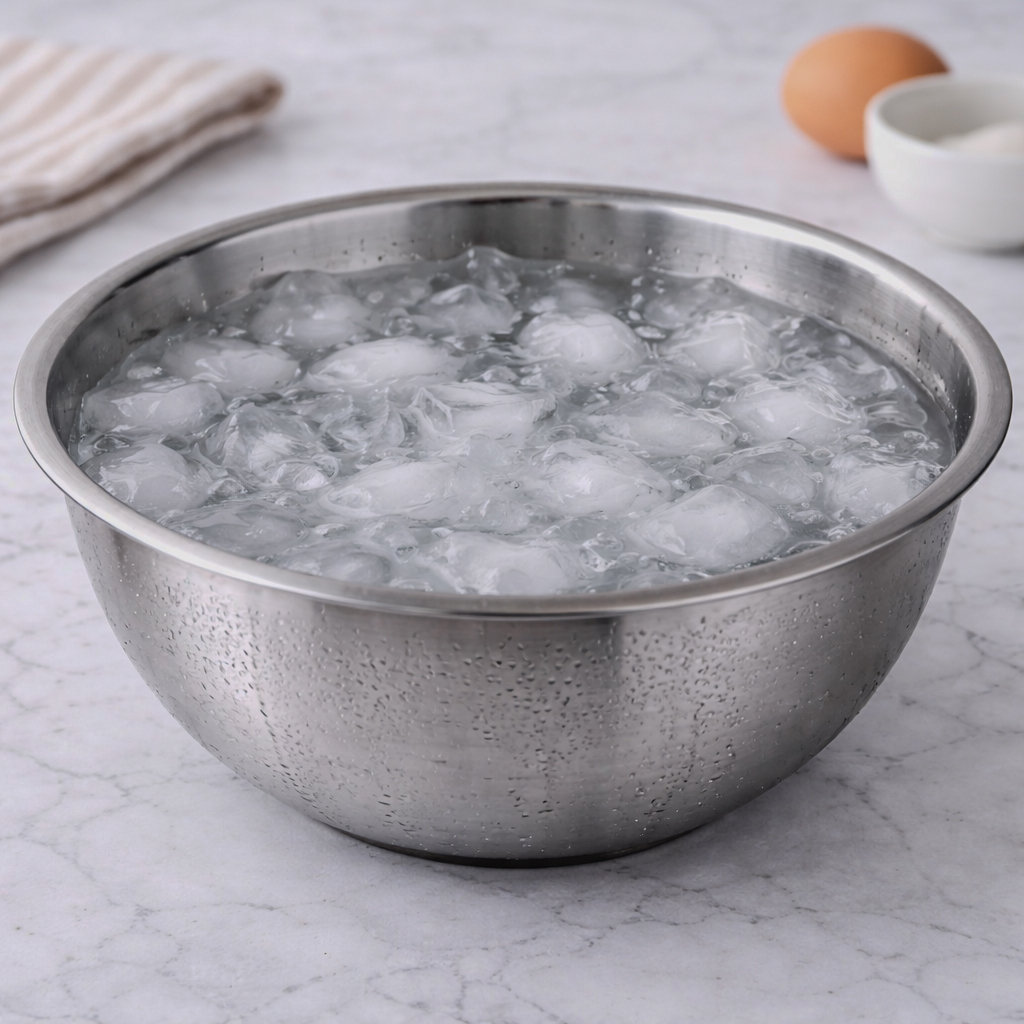
Step 5: While the eggs rest, prepare a bowl of ice water.
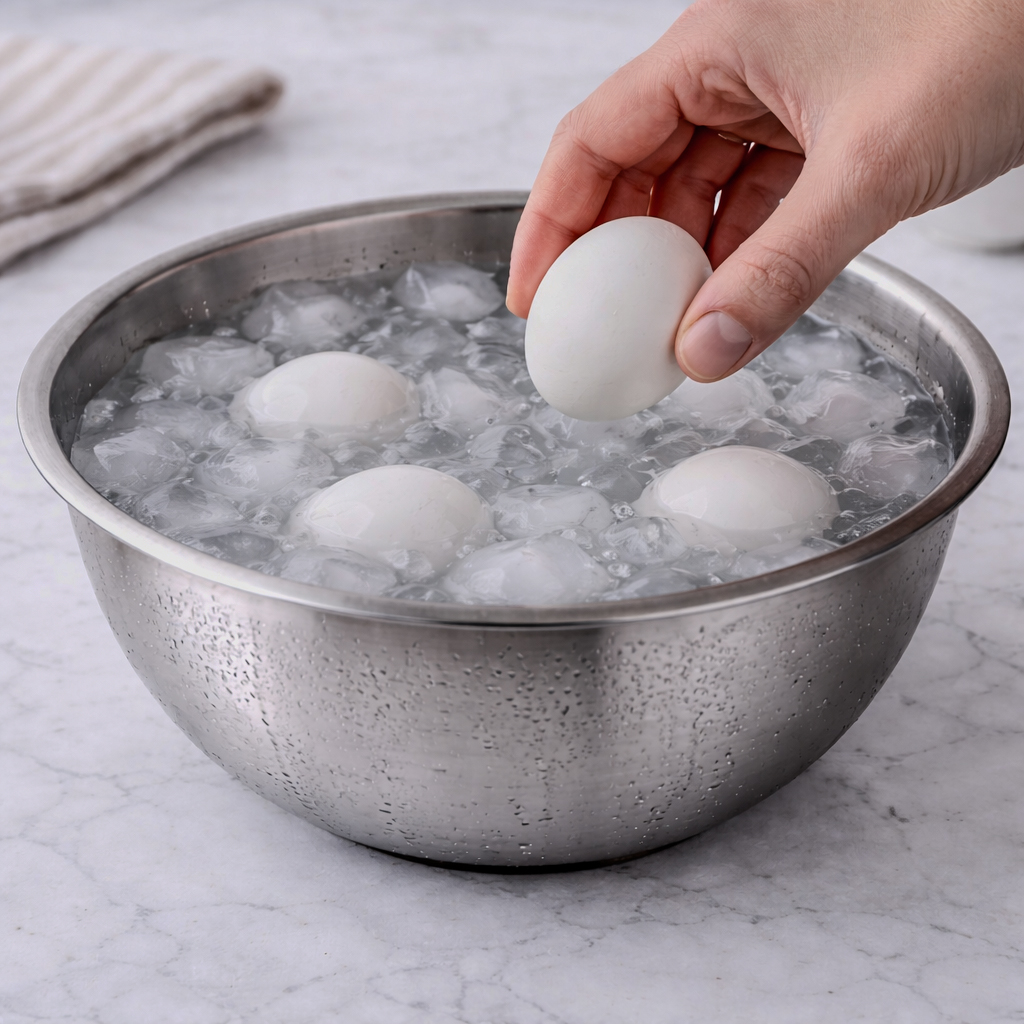
Step 6: Transfer the eggs to the ice bath and cool for about 3 minutes. This stops the cooking and helps the shells peel more easily.
Hint: If you want slightly softer yolks, try reducing the resting time to about 8½-9 minutes.
Substitutions
While this recipe is extremely simple, there are still a few ways to adapt it depending on your preferences.
• Eggs - Medium or extra-large eggs will also work, but cooking time may vary slightly
• Salt - Can be omitted if preferred
• Ice bath - Cold running water can be used instead of a bowl of ice
Even small adjustments can change the final texture, so feel free to experiment until you find your ideal timing.
Variations
Hard-boiled eggs are incredibly versatile and can be adapted into many different dishes.
• Jammy Eggs - Reduce resting time to 6-7 minutes for slightly soft yolks
• Deviled Eggs - Slice and mix the yolks with mayonnaise, mustard, and seasoning
• Ramen Eggs - Marinate peeled eggs in soy sauce, mirin, and garlic for several hours
See the ramen egg version of this technique on my website.
Equipment
Equipment can make a surprising difference when cooking eggs.
Electric Kettle
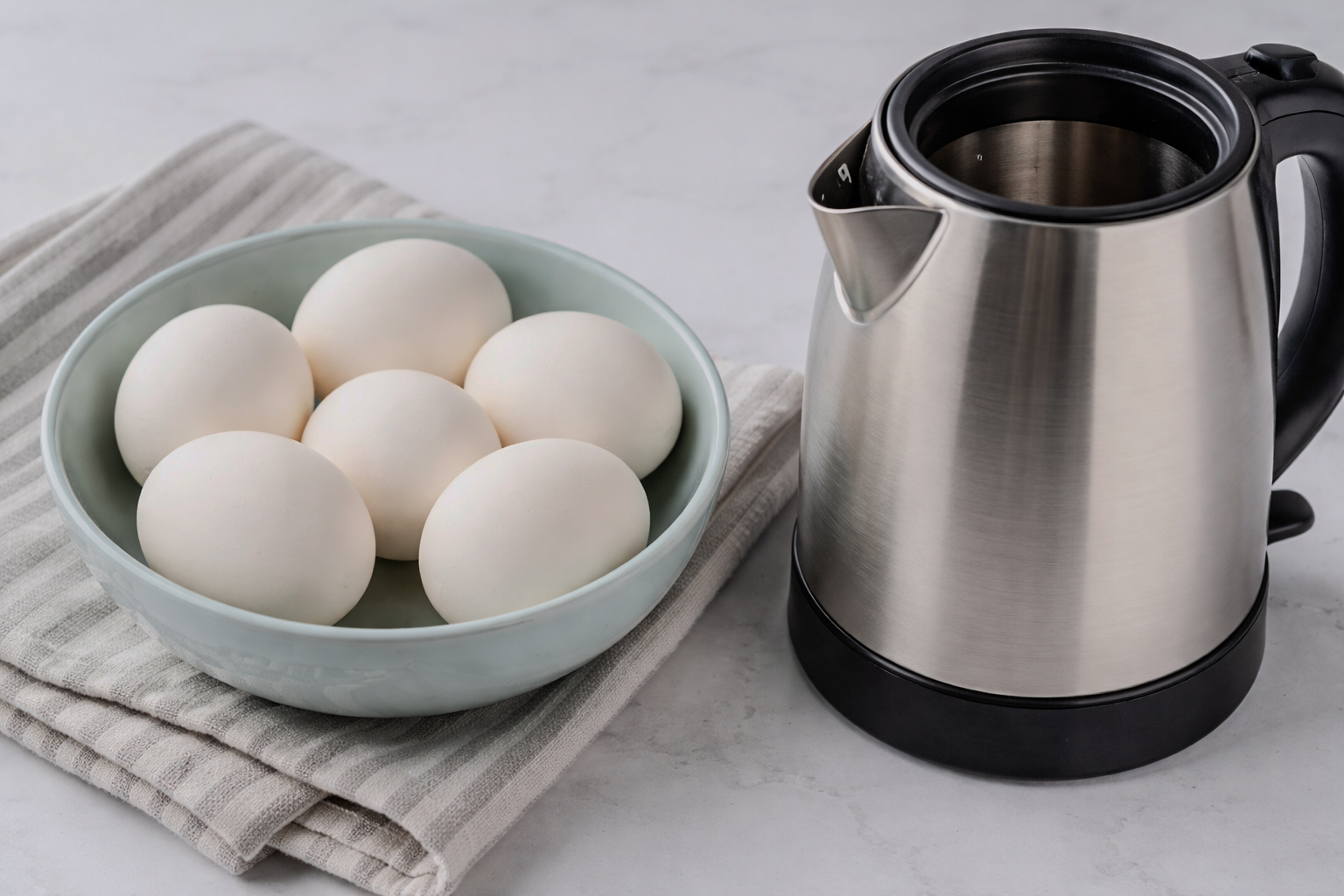
The key to this method is the fast and consistent heating of an electric kettle. Because kettles bring water to a boil quickly and shut off automatically, they create a controlled cooking environment.
Egg Poker
Piercing the egg can reduce the chance of cracking during cooking and may make peeling easier.
If you don't have an egg poker, a small thumbtack or push pin can work in a pinch.
Storage
Hard-boiled eggs store very well and are excellent for meal prep.
Store unpeeled eggs in the refrigerator for up to one week. Keeping the shell on helps prevent them from absorbing refrigerator odors.
Peeled eggs should be stored in an airtight container and used within 3-4 days. Hard-boiled eggs generally do not freeze well, as the whites become rubbery when thawed
Top Tip
Don't skip the ice bath. Rapidly cooling the eggs stops the cooking process and helps prevent the gray ring that sometimes forms around the yolk when eggs are overcooked.
It also makes the shells much easier to peel.
FAQ
Yes. As long as the eggs are fully covered with water and the kettle is turned off once boiling is reached, the eggs cook gently in the hot water during the resting period.
The small hole allows pressure to escape as the egg heats, which can reduce cracking.
This happens when eggs are overcooked. Cooling them quickly in an ice bath prevents this reaction.
Related
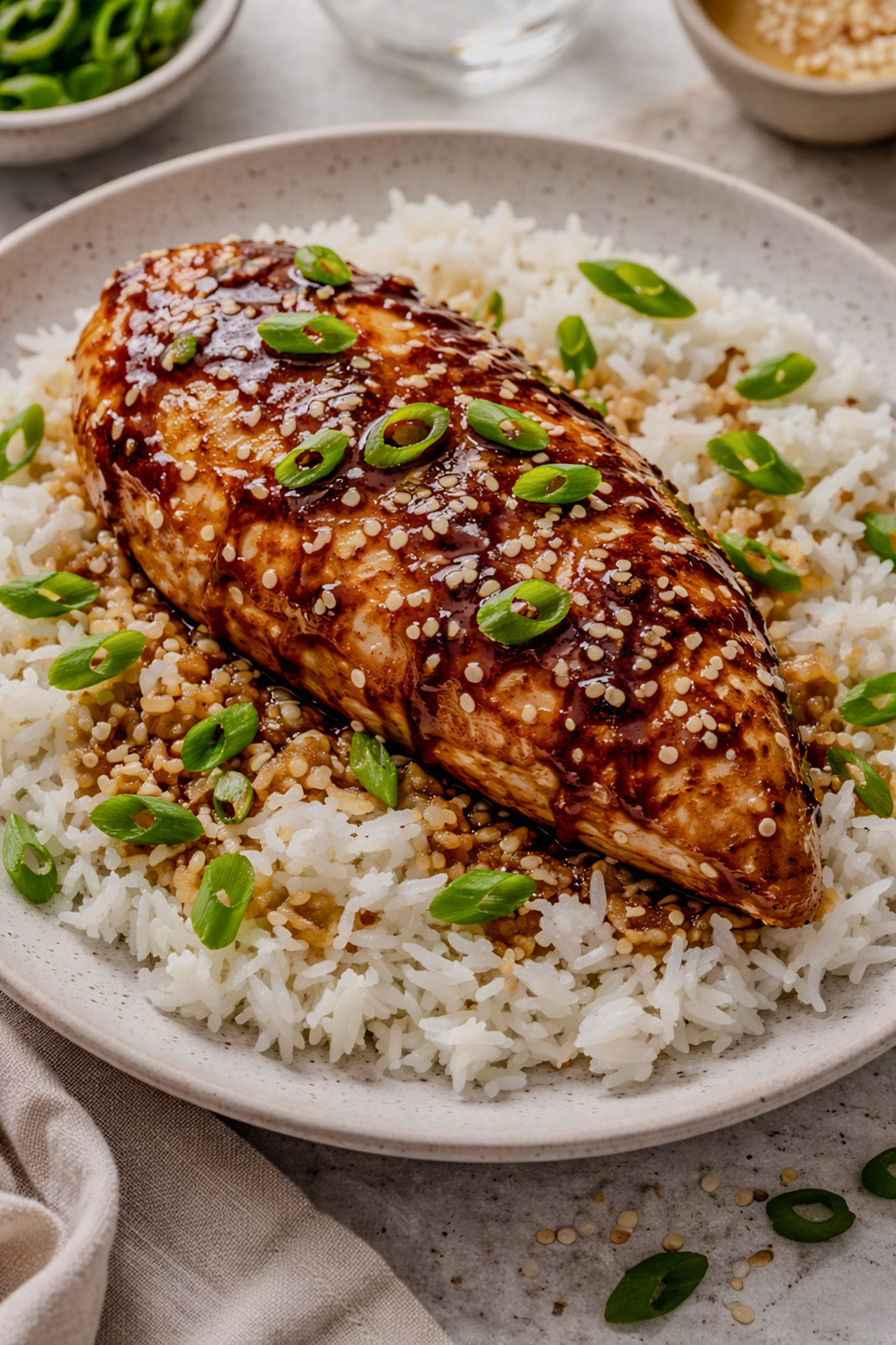
Looking for other recipes like this? Try these:

Pairing
These are my favorite dishes to serve with kettle hard-boiled eggs:
These are my favorite dishes to serve with kettle hard-boiled eggs:
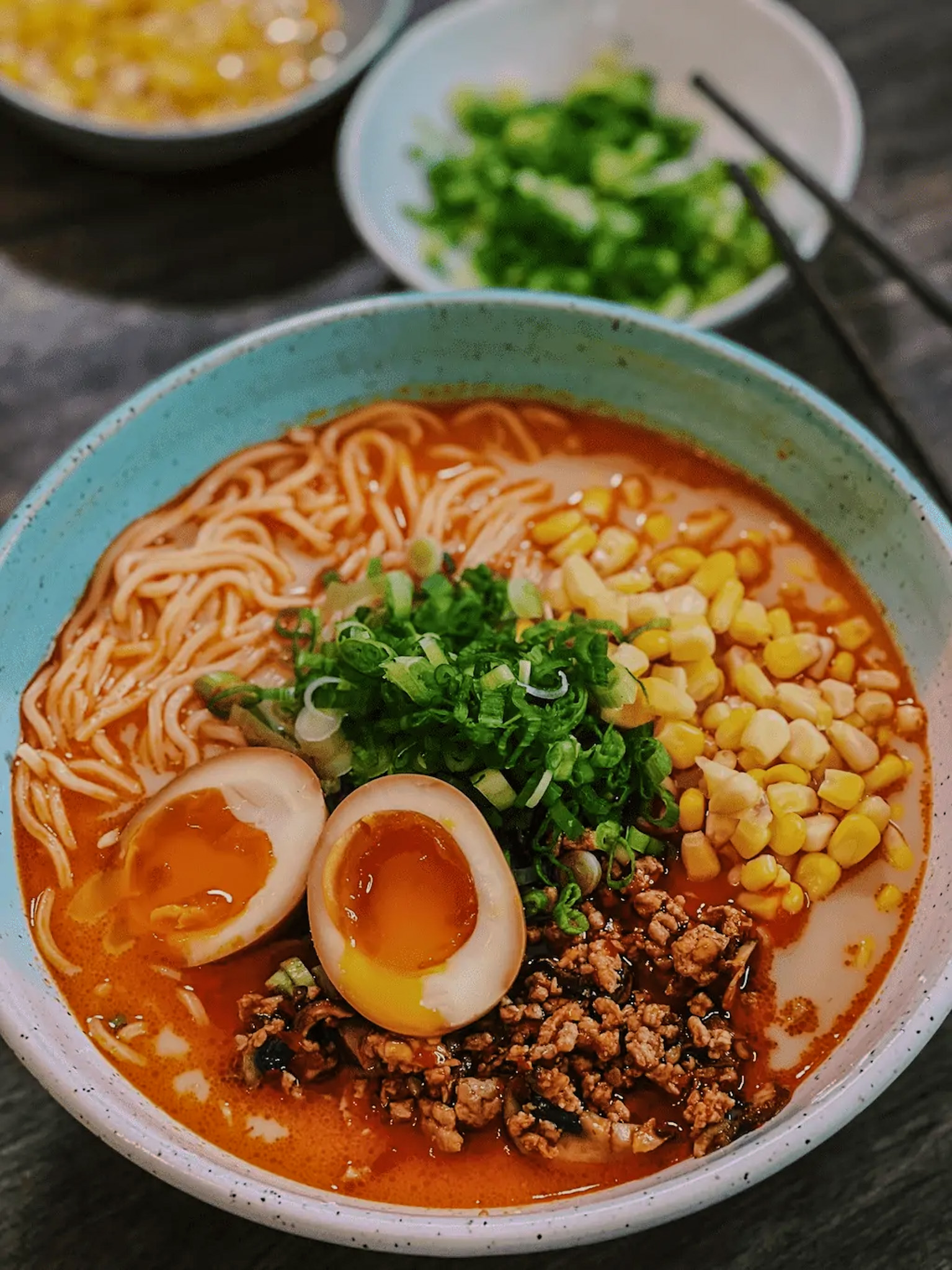
- Eggs are a must in my Spicy Miso Ramen
- A good piece of toast is usually my go to
Recipe
Hard-Boiled Eggs in a Kettle

Equipment
- 1 egg poker I highly recommend one of these; they really do make a difference
Instructions
- Use the egg poker to put a hole in the fat side of the egg
- Add the salt to the kettle, and carefully place 6 eggs in the kettle and cover with water
- Turn the kettle on. Once the water reaches a full rolling boil, turn it off
- Set a timer for 10 minutes
- Meanwhile, prepare a bowl of ice water
- After 10 minutes, transfer the eggs to the ice bath and cool for 3 minutes